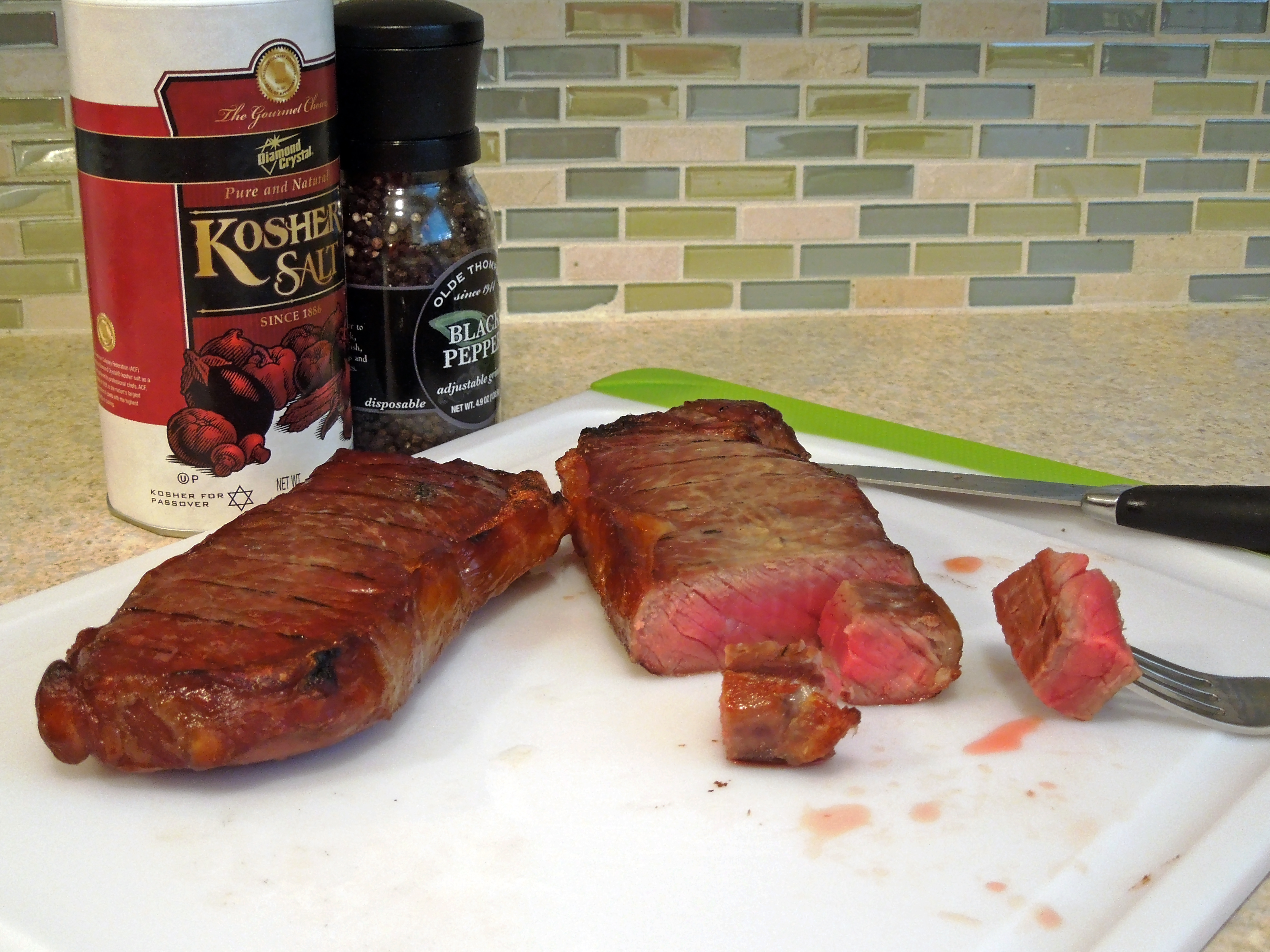
YEEEESSSSS!!! Summer is here, and that means grilling! And for today’s post, we’re focusing on steaks. What? Yes, I did say that steaks are best prepared indoors in ripping hot cast iron using a combined stovetop-broiler method. I stand by that claim. However, sometimes you want a steak that’s been kissed by fire, and then you have to grill using coal.
Before we get into that, though, I wanted to let you all know that my first book is now available! You might have noticed there’s a new store page on the site. You can order my book there, and at checkout, you’ll have the option to download the .pdf of my book after payment. You do need to register and set up an account for now to purchase the book through my store, just as a precaution so that if you have any issues with your order, I can see error reports associated with your account. I can change that setting later to allow for guest checkout once I’ve fixed any bugs. Checkout is through PayPal, so you can use either your PayPal account, or enter a credit card. If you have an account with Amazon Kindle, you can also find my book there, where checkout will be automated as usual through the Kindle checkout service.
So now that you’ve bought the book and have a delightful key lime pie recipe to serve after steaks, let’s get to the star of this week’s post. As always, I recommend coal as your fuel source for grilling. When using coal, I like to fill up the chimney starter with natural chunk charcoal, cut and roll cardboard strips into spirals in the base of the chimney, and use a long grill lighter to fire up the cardboard. Then I place the lid over the grill and chimney and wait. Sometimes I need additional cardboard spirals on-hand to make a second attempt at lighting the coal if it’s particularly windy out or if the coal is just especially stubborn that day.
Once your coals are spouting flames from the top of the chimney, use an insulated glove or mitt to dump the coals out into a foil pan with holes stabbed in the bottom. I like to use a pan because at least half the bag of charcoal are those little chips of coal that fall directly out of the bottom of the grill the second you dump out your coal. You can’t cook with coal that isn’t in your cookspace. For this particular recipe, I drop the rack that I used to dry the steaks directly on top of the pan with the coal rather than using the actual grill grate. The outer crust develops better over direct heat.
See, grilling isn’t too difficult. And neither is dry-aging. I’m sure you have a few questions, which I swear I’ll address. Firstly, why dry-age a steak? The process of dry-aging removes water from a steak, possibly up to a few ounces of water. Since water has no flavor, the natural flavors of the steak concentrate when water is removed, just like when you reduce a sauce on the stove.
But if you remove the water, isn’t the steak less juicy? Technically, yes. Juiciness of a steak more often refers to mouthfeel than to the actual quantity of moisture in the steak, though. So when the outside of the steak dries out during aging, that dry outside lends itself to a crust during cooking. The crusty outside in contrast to the softer inside still makes the enjoyer of such a fine steak believe the steak is absolutely sumptuous.
Is it worth planning a steak dinner 3-4 days in advance so I can dry-age my steaks? That depends: is the steak dinner simply because you want to stuff steak in your face yourself, or is it meant to impress someone? If you just want to enjoy a steak yourself, don’t worry about dry-aging, and use my cast iron stovetop-broiler instructions. If you’re trying to impress, then yes, definitely dry-age.
Do I have to grill my dry-aged steaks? No, you can either grill or use my stovetop-broiler method on aged steaks. However, if you opt out of aging, I suggest you use cast iron indoors. The outside of the steak won’t be dry enough to get a good crust on the grill if you don’t age; you need full contact with hot cast iron to get any kind of sear or crust on a fresh steak.
How do you dry-age at home? Okay, it’s really easy: set up a pan with a rack over it. Wrap the steaks in a layer of paper towels and set up on the rack. Store in the refrigerator for 24 hours. Replace the old paper towels with fresh paper towels. Store in the refrigerator for 48-72 hours. Remove from refrigerator and cook as you would any other steak.
That’s it? Yeah. You want to elevate the steaks out of their own juices and keep other fridge items from coming into contact with raw steak juice, and the paper towels help prevent fridge burn and funky fridge flavors. The refrigerator is notorious for drying foods, so this time, we’re making it work for us.
Alright, so now that we’re clear on aging, let’s get into our complete instructions.
Ingredients:
Steaks
Salt (Kosher or large grain sea salt recommended)
Pepper
Directions:
- Wrap steaks in paper towels and set on rack in pan in the refrigerator for 24 hours. After 24 hours, replace paper towels with fresh paper towels, and store back in refrigerator another 48-72 hours until ready to cook.
- Remove steaks from refrigerator and set out on counter. Unwrap paper towels, liberally coat with salt and pepper, and allow to sit out 2-3 hours to come up to room temperature. Store in cool oven if pets are a problem.
- Start coal while steaks are warming. Ensure grill is in safe space away from anything flammable. Starting coal early will allow time to light with lighter fluid and let lighter fluid burn off if coal doesn’t light using only a chimney (but lighter fluid is gross, so try to avoid using it if possible).
- When steaks are at temp and coal is hot, use an insulated glove or mitt to dump coal into a foil pan with holes stabbed in the bottom. Spread coals flat with spatula or tongs, then place rack with steaks to sit directly on pan edges so steaks are just over the coals.
- Cover grill with lid and cook steaks 2-2 ½ minutes on the first side. Remove lid, flip steaks, replace lid, and grill another 1 ½-2 minutes on the second side.
- Allow steaks to rest 5 minutes before serving. Enjoy with grilled corn, skewered shrimp, or vegetable kebabs.
By the way, since coal burns forever once it does finally light, I recommend investing in a bag of marshmallows and some skewers for after dinner.
I hope you guys enjoy the delight that is having a dry-aged steak at home. I think it’s way better to get a porterhouse on sale at the store and dry it yourself a few days than to pay $40 at a restaurant for the same exact thing. Please leave your thoughts in a comment below, or get in touch with me directly by filling out the form on the contact page.
Follow me on Instagram!
https://instagram.com/thedeglutenizer/
Like me on Facebook!
http://www.facebook.com/TheDeglutenizer
Follow me on Twitter!
http://twitter.com/TheDeglutenizer
Follow me on tumblr!
http://thedeglutenizer.tumblr.com
Follow me on Pinterest!
http://www.pinterest.com/thedeglutenizer/

One thought on “How to Dry Age and Grill Steak”